Source High Visibility Reflective Boiler Suit for Road Administration, Security, Sanitation
Explore 30 listings for high visibility reflective boiler suit options including waterproof and breathable designs. Buyers can compare models like BWS-8089 and GGF020, review customization services, and check delivery times from manufacturers in China.
Key considerations
Products List




Comprehensive Sourcing Guide
Strategic Sourcing Guide for High Visibility Reflective Boiler Suits
Understanding Product Definitions and Core Attributes
When sourcing high visibility reflective boiler suits, buyers must first distinguish between the specific garment types available in the global market. The supplied product data indicates a clear segmentation between reflective vests, reflective coats, and safety jackets, yet the term "boiler suit" often implies a full-body protective garment that may integrate these features. The observed product attributes reveal that the market offers items with functions such as Anti-Bacterial, Waterproof, Durable, and Breathable properties. These functional claims are critical for workers operating in diverse environments, from road administration to sanitation work.
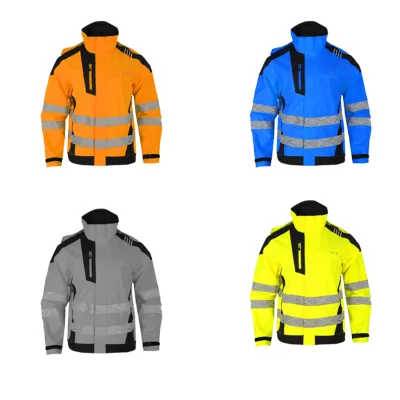
The material composition varies significantly across listings, with Cotton and Polyester both appearing as primary fabric choices. Cotton may offer superior breathability for lighter duties, while Polyester is frequently associated with enhanced durability and water resistance, aligning with the observed "Waterproof" function. The color palette is dominated by Orange and Yellow, which are standard for high-visibility applications, though "Customized Color" is also listed as an available option. Seasonal suitability is another key differentiator; some products are designated for Spring and Autumn use, while others are explicitly rated for Winter conditions, suggesting variations in insulation and lining thickness.
Buyers should note that the "Type" attribute in the data ranges from Reflective Vest to Reflective Coat and Reflective Jacket. A true boiler suit, often required for heavy-duty industrial maintenance, may need to be sourced as a custom configuration or a specific model not explicitly named in the general list but implied through the "Safety Protection Clothing" style category. The application scope is broad, covering Transportation, Road Administration, Traffic Warden, Security Staff, and Sanitation Workers. This diversity necessitates a careful review of the specific model numbers, such as BWS-8089, WJ-5185, or GGF020, to ensure the garment meets the specific physical demands of the intended role.
Technical Specifications and Material Composition
Technical specifications form the backbone of any procurement decision for high-visibility workwear. The data highlights several specific model identifiers, including V4, v19, BWS-8045, WJ-5076, WJ-5233, GGF005, GGF014, and GGF032. These model numbers serve as unique identifiers for buyers to request detailed technical sheets. A critical observation is the variation in sizing standards; some products adhere to a "Customized size" standard, while others utilize a standard S/M/L/XL range. This discrepancy requires buyers to clarify whether the supplier offers bespoke sizing or relies on a fixed size chart, which directly impacts inventory management and fit for diverse workforces.
The material composition is a primary driver of performance. The presence of both Cotton and Polyester in the product attributes suggests that buyers must verify the blend ratio for their specific use case. For applications requiring high durability and water resistance, such as sanitation work or road administration, Polyester-based materials are likely more appropriate. Conversely, for tasks requiring high breathability in moderate climates, Cotton blends may be preferred. The "Waterproof" function is listed multiple times, indicating that many suppliers offer treated fabrics. However, the "Breathable" attribute is also present, creating a potential trade-off that must be managed. Buyers should request specific fabric weight (GSM) and coating details to ensure the garment provides adequate protection without causing heat stress.
Packaging specifications also vary, with options ranging from "1PC/Polybag, 8 PCS/CTN" to "1 Piece in PP Bag 5 Pieces/ Carton." These packaging details influence logistics costs and storage efficiency. The standard carton dimensions are noted as "35205cm" for some items, which is essential for calculating shipping volumes and freight costs. Additionally, the "Customization" attribute is marked as available, and "OEM" or "Support" is frequently listed. This implies that buyers can request custom branding, logos, or specific color combinations, provided they meet the minimum order quantities (MOQ) which range from 1 to 1000 units. The ability to customize is a significant advantage for companies seeking to align their safety gear with corporate identity or specific regulatory color codes.
Compliance, Certification, and Regulatory Standards
Navigating the compliance landscape for high-visibility clothing is essential for ensuring worker safety and legal adherence. The supplied data explicitly mentions the "CE" standard for certain products, indicating that some items meet European conformity requirements. However, the data also notes "ISO 20471" as a low-confidence background fact, meaning buyers should not assume this standard applies to all listed products without verification. The ISO 20471 standard is the primary international benchmark for high-visibility clothing, specifying requirements for background material, retro-reflective material, and design.
Buyers must treat the "prod_standard" attribute with caution. While some entries list "Customized size" or "Can Be Customized" as the standard, others reference specific certifications like CE. This inconsistency suggests that compliance is not uniform across the supplier base. For procurement in regulated industries such as road administration or traffic warden duties, compliance with local regulations (e.g., EN ISO 20471 in Europe, ANSI/ISEA 107 in the US) is non-negotiable. The "Standard" field in the data should be cross-referenced with the specific jurisdiction of the buyer's operation.
Furthermore, the "Business Type" is identified as "Manufacturer & Exporter," which can be a positive indicator for direct quality control, but it does not guarantee certification. Buyers should explicitly request copies of test reports and certification documents for each model number before placing an order. The "Sample Time" of 7-10 days allows for a preliminary quality check, but it does not replace the need for third-party verification of compliance. If the product is intended for use in high-risk environments, relying solely on the supplier's claim of "CE" without a valid certificate is a significant risk. The "Customized size" standard mentioned in the data implies that non-standard sizes may not automatically carry the same certification as standard sizes, requiring specific validation for custom orders.
Cost Drivers and Pricing Dynamics
The pricing landscape for high-visibility reflective boiler suits is influenced by a complex interplay of factors, including material quality, customization level, and order volume. The observed price range in the market is broad, spanning from $0.36 to $50 USD. This wide variance indicates that the market includes both basic, low-cost items and premium, highly specialized protective gear. The lower end of the price spectrum likely corresponds to simple reflective vests or basic polyester jackets with minimal features, while the higher end may reflect full-body boiler suits with advanced waterproofing, insulation for winter use, and custom branding.
MOQ (Minimum Order Quantity) is a critical cost driver, with observed ranges from 1 to 1000 units. Buyers purchasing small quantities, such as single units or small batches, will likely face a higher per-unit cost due to the fixed costs of setup and production. Conversely, larger orders can leverage economies of scale to reduce the unit price. The "OEM" and "Customization" options introduce additional cost variables. Custom printing, specific color requests, and bespoke sizing often incur setup fees or higher per-unit costs compared to standard stock items.
Lead time is another significant factor in the total cost of ownership. The data indicates a "Delivery Time" of "Normally 60-90 Days." This extended lead time must be factored into the procurement budget, as it may necessitate holding larger safety stock or incurring expedited shipping costs if urgent needs arise. The "Sample Time" of 7-10 days is relatively short, allowing for quick iteration on design and fit, but the long production lead time suggests that planning must be done well in advance. Buyers should also consider the origin of the products, with "China" and specific regions like "Fujian China" and "Taian" listed. While these regions are known for manufacturing capabilities, logistics costs and potential tariffs can impact the final landed cost.
Typical Applications and Operational Requirements
The operational context for high-visibility reflective boiler suits is diverse, ranging from light-duty security to heavy-duty road administration. The data explicitly lists applications including Transportation, Road Administration, Traffic Warden, Security Staff, and Sanitation Workers. Each of these roles has distinct environmental challenges that dictate the required specifications of the garment. For instance, Traffic Wardens and Road Administration personnel require garments with high durability and waterproofing to withstand outdoor exposure and potential contact with vehicles. The "Reflective Coat" and "Reflective Jacket" types are particularly relevant here, offering enhanced coverage compared to vests.
Sanitation workers often operate in environments where hygiene is paramount, making the "Anti-Bacterial" function a critical attribute. This feature helps prevent the growth of bacteria and odors, which is essential for workers handling waste or working in unsanitary conditions. The "Breathable" attribute is also vital for these roles, as it helps regulate body temperature and reduces sweat accumulation, thereby improving comfort and reducing the risk of heat-related illnesses.
Seasonal requirements further refine the selection process. The data distinguishes between products suitable for "Spring & Autumn" and those for "Winter." Winter-specific garments likely include additional insulation or thermal lining to protect against cold temperatures, while Spring and Autumn models may focus on breathability and light rain protection. The "Style" is categorized as "Safety Protection Clothing," which implies a focus on utility and safety over fashion. Buyers must ensure that the selected garment not only meets the visual requirements for high visibility but also provides the necessary physical protection for the specific hazards present in the work environment.
Supplier Evaluation and Quality Control Protocols
Evaluating suppliers for high-visibility workwear requires a rigorous approach to ensure consistency and reliability. The data identifies the business type as "Manufacturer & Exporter," which suggests a direct relationship with the production facility. This can be advantageous for quality control, as manufacturers often have more direct oversight over the production process than trading companies. However, buyers should verify the specific capabilities of the manufacturer, including their experience with reflective materials and waterproofing treatments.
Quality control should begin with the sampling phase. With a "Sample Time" of 7-10 days, buyers should utilize this period to conduct thorough testing of the sample against the required specifications. Key areas to inspect include the quality of the reflective tape, the integrity of the waterproof coating, and the durability of the stitching. The "Customization" and "OEM" options should be tested to ensure that the branding and sizing are accurate and do not compromise the garment's safety features.
Inspection protocols should also cover the packaging and labeling. The data mentions various packing methods, such as "1PC/Polybag" or "1 Piece in PP Bag." Buyers should verify that the packaging protects the garments during transit and that the labeling includes all necessary safety information and care instructions. The "Standard" of "35205cm" for cartons should be confirmed to ensure efficient stacking and storage. Additionally, buyers should request a quality assurance plan from the supplier, detailing how they monitor production quality and handle defects.
Long-Term Procurement and Supply Chain Considerations
Long-term procurement of high-visibility reflective boiler suits requires a strategic approach to supply chain management. The "Delivery Time" of 60-90 days is a significant factor that necessitates careful inventory planning. Buyers should establish a reorder point based on historical usage data to avoid stockouts, especially given the long lead time. The ability to customize orders allows for flexibility in responding to changing workforce needs, but it also requires clear communication and documentation to ensure consistency across multiple orders.
Sustainability and ethical sourcing are increasingly important considerations in the B2B procurement landscape. While the data does not explicitly mention sustainability certifications, buyers should inquire about the supplier's environmental practices, particularly regarding the materials used (Cotton vs. Polyester) and the disposal of waste. The "Customized size" option can also contribute to sustainability by reducing returns and waste associated with ill-fitting garments.
Finally, the relationship with the supplier should be built on transparency and mutual benefit. The "Service" attribute of "OEM ODM" indicates a willingness to collaborate on product development. Buyers should leverage this to create a long-term partnership that allows for continuous improvement of the product line. Regular audits and performance reviews can help maintain high standards and ensure that the supplier remains aligned with the buyer's safety and quality expectations. By focusing on these long-term factors, buyers can secure a reliable supply of high-visibility reflective boiler suits that meet the evolving needs of their workforce.
FAQs
What materials are used for high visibility reflective boiler suits?
Products are typically made from Cotton or Polyester to balance breathability and durability. Buyers should verify the specific material blend, as Polyester offers enhanced water resistance while Cotton provides comfort for moderate climates.
Which certifications apply to high visibility reflective boiler suits?
Some products explicitly meet the CE standard, while others list customized size standards. Buyers must request specific test reports for ISO 20471 compliance, as this is not guaranteed for all listed models without verification.
Can I customize the color and size of the reflective suit?
Yes, customization is available for colors like Orange, Yellow, or custom requests, and sizes can be tailored. However, buyers should confirm if custom sizes retain the same certification as standard S/M/L/XL options.
What is the typical lead time for manufacturing these suits?
The normal delivery time is typically 60 to 90 days from order confirmation. Sample production takes 7 to 10 days, so buyers should plan inventory well in advance to avoid supply chain delays.
How do I find suppliers with specific MOQ requirements?
Minimum Order Quantities range from 1 to 1000 units depending on the supplier and customization level. Buyers can source small batches or large volumes, but custom printing may require higher minimums than standard stock items.
Which functions are standard for these high visibility suits?
Common functions include Waterproof, Durable, Breathable, and Anti-Bacterial properties. These features are essential for roles like sanitation work or road administration, ensuring protection against weather and hygiene risks.